
People whose work may change should have a real say before the rules are adopted
Workers First AI helps working people shape how automation and AI change their work. We focus on rideshare drivers and robotaxi services. Robotaxis offer an unusually concrete place to begin: their trips can be counted, and where the law gives them authority, city and state officials can set conditions and decide whether service may operate.
Why Workers First AI
Technology does not decide who benefits from progress. Public rules and company decisions shape who gains and who bears the costs. Working people should have a say. Artificial intelligence is beginning to change how work is done across many fields. The central question is not simply what AI can do. It is who will benefit when it does it.
That is the premise of this project: technological progress should not require working people to sacrifice their economic security so that others can capture the gains. When automation threatens existing work, the rules should be established before displacement occurs. Working people should be protected against losses, should share meaningfully in the benefits automation creates, and should have a real voice in deciding what protection and benefit mean.
Workers First AI is a project to help working people shape decisions about whether and how AI is used, protect their livelihoods, and share in any gains. We do not advocate for AI expansion.
This is not an argument against technology. It is an argument about the terms of progress. The rules governing robotaxis are still being written. So, in a much larger sense, are the rules governing artificial intelligence and work.
Drivers helped build Workers First AI
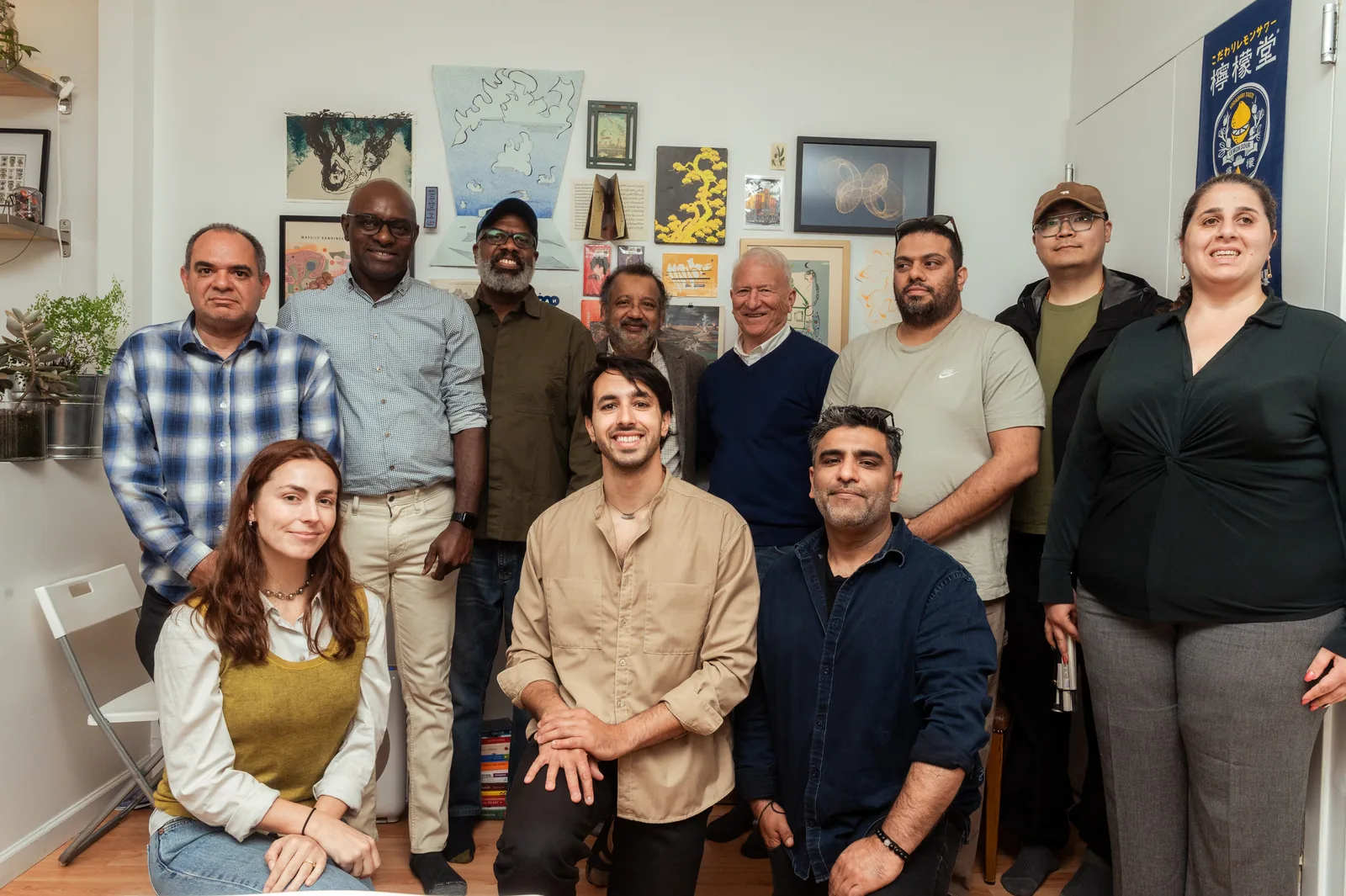
Rideshare driver Tash Diallo co-led the project with Andy Stern and Rayan Semery-Palumbo. Around 100 participating drivers in New York City, San Francisco, and Atlanta described how driving supports their lives, and they disagreed about whether robotaxi service should operate. In later group discussions, drivers evaluated policy ideas against their own experience and gave feedback based on their hopes and fears. Their testimony and judgment shaped the questions the project team asked and the two requirements it developed for protecting drivers.
A research method for other sectors
Technologies, institutions, laws, workforces, and remedies differ across sectors, so the policy choices in this report do not transfer unchanged. Researchers and working people should begin with the conditions of work and the best available evidence about the role automation or AI may play. They should identify who controls the relevant decisions and economic gains, develop policy options, test those options with affected working people and outside experts, make recommendations, and state what remains unknown.
Project leadership
Andy Stern
Led the project and advised its strategy. He helped build financial and institutional support, recruited proposal contributors and advisors, and connected the work with leaders in labor, government, economics, and technology. His final editorial review helped shorten the report, expand its recognition of contributors, and strengthen the conclusion. He led the Service Employees International Union from 1996 to 2010 and is the author, with Lee Kravitz, of Raising the Floor: How a Universal Basic Income Can Renew Our Economy and Rebuild the American Dream.
Rayan Semery-Palumbo
The report's primary author. He led the research, policy development, analysis, writing, and document production, integrating driver testimony, published research, submitted proposals, financial modeling, and advisory review into the two worker requirements and five policy areas. He grew up in poverty and experienced homelessness with his family in Arizona, graduated from Yale University, and completed his doctorate at the University of Oxford as a Rhodes Scholar. At One Fair Wage, he has helped build Living Wage For All, a national coalition working to raise minimum wages. He co-authored What Has Democracy Done for You Lately? (The New Press, 2026).
Tash Diallo
Led the project and its driver engagement, reviewed the report, and contributed to policy development. He organized app-based drivers with the Independent Drivers Guild, including campaigns for in-app tipping and New York City's first-in-the-nation minimum-pay standard for app-based drivers, and has also worked on how automation will affect drivers and what a fair transition should require.
Advisors and contributors
Advisory panel
Twelve people served on the advisory panel. Eleven are listed below; one member chose not to be named publicly.
Members reviewed different subsets and versions of work in development; the panel did not review the final report as a panel. Titles are for identification only.
- Jillian Arnold
- Labor & Technology Intelligence Officer, IATSE
- Roy Bahat
- Head of Bloomberg Beta
- Juliana Bidadanure
- Associate Professor of Philosophy, NYU Arts & Science; Affiliate Faculty of Law, NYU School of Law
- Ron Bloom
- Co-Chair, Center for State Labor Innovation (CSLI)
- Adrian Brown
- Founder and CEO, Windfall Trust
- Laphonza Butler
- Partner, Actum; former U.S. Senator for California
- Eric Gertler
- Executive Chairman and CEO, U.S. News & World Report
- Pamela Mishkin
- Former Head of Economic Research Team, OpenAI
- Andrew Salkin
- Founding Principal, Resilient Cities Catalyst
- Brendan Sexton
- President, Independent Drivers Guild
- April Verrett
- International President, Service Employees International Union (SEIU)
Policy proposal contributors
We invited policy proposals and selected twelve submissions for further development.
Selection did not mean adoption; the report credits ideas it uses and presents others as alternatives. Titles and affiliations identify contributors. An individual's affiliation does not mean that the organization submitted or endorsed the proposal.
- Laura Beltrán Figueroa
- Pennsylvania Policy Center; Rutgers School of Management and Labor Relations. Autonomous-vehicle workforce transition assessment.
- Tash Diallo
- Rideshare driver, driver advocate, and project leader. Mobility transition and resilience fund.
- Devesh Kodnani & Emily Lemmerman
- MIT Sloan School of Management. Managed permit auction and driver transition fund.
- Jacob Leibenluft
- Washington Center for Equitable Growth. Automation fund governed through a worker-inclusive committee.
- Renan Magalhães
- European University Viadrina; Kelso Institute Europe. Collective ownership, a worker-benefit trust, and driver-owned fleets and service cooperatives.
- Dawood Mian
- AutoMarketplace. Converting existing New York City vehicle licenses into continuing income and a tool for pacing autonomous entry.
- Graeme Nuttall OBE & the Institute for the Future of Work
- Joint proposal. Driver ownership trust.
- James A. Parrott
- Center for New York City Affairs, The New School. Gradual robotaxi entry with a locally administered licensing and royalty system for qualifying long-tenured taxi and app-based rideshare drivers, independently established minimum-pay standards, and a driver cap.
- Predistribution Initiative (PDI)
- Driver Equity Transition Stakes (DETS), with an advisory supplement on its financing and governance.
- Three proposals submitted without attribution
- Service limits, an invested fund, and a trip-surcharge fund.
Funding and independence
- Omidyar Network
- Provided funding for the project.
- Economic Security Project
- Collaborated on the work, hosted Andy Stern and Rayan Semery-Palumbo as fellows, and contributed funding that supported Rayan Semery-Palumbo's fellowship.
- Assets Under Movement (formerly Amalgamated Foundation)
- Provided fiscal sponsorship.
Participation, acknowledgment, proposal selection, panel service, institutional support, or credit for an idea does not imply endorsement of the report's analysis, conclusions, or recommendations. The project team is responsible for the report's analysis, conclusions, and recommendations.
To follow the project and what comes next, get updates. For questions or interviews, contact the project team.